Sunday, 6 May 2018

Interview - Thia & Greebow of Cognitive Merchant

The Cognitive MerchantIt was my great pleasure to interview Thia and Greebow of the fantastic bespoke gamer's products makers Cognitive Merchant. They've been producing hand-crafted individualised tabletop, RPG and LARP products for a while and it's great stuff.

I love this interview because I got a message from them about it saying 'We just pretended you was with us and got somebody to ask your questions', so they quite literally roleplayed their answers. I'm going to have to add a point to their 'awesome' board for that.

Welcome to Farsight Blogger! Please tell us about yourselves and how you got started in the tabletop roleplaying hobby.

(Thia) Hey I'm Thia, I am a leather crafting wood elf! But in real life I run a dance studio, I'm a fire and side show performer along with my amazing girls at Monster Cirque. Plus I create leather gaming goods with my partner at The Cognitive Merchant.

I started playing D&D when I was a kid in Poland. I gamed with my brother and his friends. I was the only girl, but it was never a thing, I was just another geek at the table.

(Greebow) Hi I'm Greebow. I'm a shape shifting Gnome wizard! But unfortunately in the real world I'm just a very flawed human LOL. I used to work running bars and office work until I got diagnosed with CFS (Chronic Fatigue Syndrome). Now I host the odd event but mainly work creating geeky goodness for mine and Thias' business The Cognitive Merchant. I got into TTRPG's just over four years ago after I met the love of my life Thia. She knew I had always been a comic book and fantasy geek but had never real played any table top games apart from a little Warhammer fantasy.

She told me of her love for D&D and that we should find a place to try it. We found the awesomeness that is Fanboy 3 in Manchester (go check them out!), went down for the Sunday Adventure League session of D&D. And I instantly fell in love with that as well! They have both been my world ever since. I love them both so much, maybe Thia a little more.....but only just.

Cognitive Merchant is something pretty special; the bespoke crafted items you create for gamers are unique and quite gorgeous. What made you decide to try your hand at this?

(Greebow) Thank you. Hearing words like that means so much to us, you have no idea. We put a lot of time and love into each one. There all hand crafted by us in our tiny work room or on our front room table. Its a running joke that the only time we are not creating is when we are eating. Projects come everywhere with us!

(Thia) Yeah we really do appreciate the positive feedback.

(Greebow) This all started after we saw the state of a friends players hand book, all falling apart with the cover all messed up. Thia told him she could probably fix it. She was just going to glue it back together.

(Thia) But I wanted to make it look awesome and not fall apart so easy. So I spent a little time working that out.

(Greebow) What she is not telling you is she spent a few days intensively learning how to rebind old books and then learning how to cover them in leather. She added lots of personal touches to his book.

(Thia) He was so happy when he got it. Made it all very worth it.

(Greebow) Other gamers saw it and just started coming to us with there books. Word spread pretty fast.

Then we decided we really wanted to make gaming products that are worthy of the folks using them. Let's face it, the gaming community is one of the very best to be part of. I'm always blown away by the imagination, love, support, and creativity it puts out there. We just want to bring a little of there fantasy to life if we can.


You do custom book covers, dice bags, dice, GM screens, all kinds of things that help to enhance the roleplaying experience. What’s your design and production process?

(Thia) First and most important, we talk to the folks wanting a product. Ask them what they are looking for and what its being used for. Like what game? Or is it something for LARPing! Then we talk to them about themes or colour scheme they like. Maybe they roll play as a Necromancer and a skull motif would be perfect. Maybe there gaming character just slayed an ancient red dragon and wants something made from its hide!

(Greebow) For us its all about keeping their fantasy world going and alive.

(Thia) Then I get to creating the design for it. Some times we have templates we have already made and know work. Sometimes a totally new template needs making.

(Greebow) The practicality and creation of the design is someing I feel Thia really excels at. I'm more about the colour and style. So together we like to think our skills compliment each other.

(Thia) Then we cut out the leather and treat it.

(Greebow) I get working on dying the leather, antiquing or distressing it depending on what's needed. If there is tooling or stamping to be done, we divide that depending on what it is.

(Thia) After that its assembly and adding the extras. This means hours or days of stitching just depending on the product.

Me and Greebow now have perminant tough calluses on our fingers from stitching and lacing LOL.

(Greebow) We then test everything. With the dice cups and bags we make sure they're strong and can open and close fine (leather is always tough and tight at first). With our all in one GM kits we test every part of it from the magnetic initiative board and the dice tray and roller to it actually transforming into the carry case. There expensive to ship out so everything has to be perfect.

(Thia) We always have multiple projects on the go at once as the orders just keep coming in, so its a big juggling act for us. But we have a digital order book as well as a hard copy one that helps us keep on top of things.


What would you say is your most sought-after item?

(Thia) That's an easy one. For sure its our all in one GM kit! There is a 20 week wait on those bad boys at the moment. They are our most complicated and detailed build. They're all custom made for the style and needs of the individual Games Master. There are just so many different aspects to the design, both seen and not seen from the outside.

(Greebow) I think its kinda important to say how that product came about. It was just over a year ago I think.

We had a GM (Jonathan Syson) who is just awesome, we have a lotta love for that guy, but he was always knocking his basic GM screen over.

(Thia) "Oh is that the beholder we must be fighting in the next room? I think we will go the other way!"

(Greebow) So when visiting Thias' family in Poland we decided to try to make some legs for his screen to stop it falling over. We had also been watching a lot of Matt Mercer and Satine Phoenix on their GM tips program. We realised just how hard a GM's job is to bring us all this adventure. How very little room is behind that screen for all they need.

(Thia) So we made the desicion to not just solve the falling over problem but as many problems as we could.

(Greebow) So we contact a big bunch of our local GMs and asked them to give us their top five problems, that are not players! Nothing we can do about them LOL.

Lots of things came up, such as, not enough space, forgetting when a character had a spell on them, dice rolling off the table, keeping initiative order, keeping notes and maps in one place, never having the info they need in view, working out who is in a spell radius, and lots more!

(Thia) They have so much to think about, let alone an entire populated world in their head.

(Greebow) We tackled every problem and listed possible ways to solve it. Brain stormed and brain stormed, and we eventually solved them.

Then we just had to find a way to put it all together so that it became compact. One of the problems that got mentioned was forgetting something vital to the game. Another GM said he kept everything in one big rucksack. THAT WAS IT! A carry case that you could also put your books in and transformed into an all in one GM screen.

(Thia) We made Jonathan and another of our GMs Dave a prototype kit at what turned out to be way less than cost price LOL. With the deal we could borrow them back over time to check them and ask lots of questions.

People saw the kits locally and wanted them. Orders started coming in, with folks wanting all sorts of colours and themes.

(Greebow) Then a friend we had made one for (Oli Wis) posted photos of his on Reddit. Next thing I know I'm getting a message and a screenshot telling me to get on Reddit and answer questions now. The comments and likes had gone through the roof. I was crazy surprised and very humbled at people's response.

(Thia) Lots of people asking how to get one and do we ship to the USA or Austria etc.

(Greebow) It was a really surprising and happy day for us. Big thanks to Oli, cheers mate.


I’ve got to ask; the photo of you two in costume and makeup on the front page is awesome, how did that come about?

(Thia) Haha yeah that was so much fun! We love dressing up as characters. We had an amazing make up artist called Sanita Liepina and one of the best photographers we know, Darren McGinn. Both just amazing creative people.

(Greebow) Basically when we created The Cognitive Merchant we wanted to keep it all in a fantasy world. So we made ourselves characters, Thia & Greebow. The Cognitive Merchant itself is a magical moving workshop that appears and disappears where needed. We create magic items to shape the destinies of adventurer's.

(Thia) For our website and advertising we wanted to bring these characters to life. So we did! You should check out our Patreon video we did at the same time (also created by Darren McGinn). It was so much fun it really was. We often even make stories up of how we adventure to get the materials needed for the magic items. Plus Thia and Greebow are D&D characters we actually play as. So its amazing to become them in real life when working at cons or doing promotion stuff.

Image may contain: 2 people, people smiling, people sitting and indoor

What else can we expect to see from Cognitive Merchant in the future?

(Greebow) Ooooh so so much. There is not enough time in the day for all the new things we want to make. But we are currently training up a couple of apprentices to help lighten the load.

One of the main things we are working on and waiting for a special event to launch it is our PLAYERS KITS! We have put a prototype out there and getting feedback, working hard on ways to improve it and patent it. It can be a long process that one. But soon.

I'm gonna be working with Thia to bring out more custom LARPing armour and accessories.

(Thia) We have a range of simple dice trays coming out. The other big project is a set of really cool leather projects for Magic the Gathering and other card games. All custom made and hand crafted as usual.

(Greebow) We are also going to be at some con's soon. First big one for us will be UK Games Expo in Birmingham , then Dragonmeet in London. There will me some con only merch available at our stall there. And if you are in the states we have the most awesome American ambassador, Baylor Banis from the B&B Tavern. He will be selling our magic items at Mechacon this year. He is a really great guy. Our very own happy Hobbit and his little furry face means the world to us.

(Thia) I think another thing that might be worth a mention is that we have just started streaming a fortnightly game with him and some friends. Its called Borovia Bites and you can find it on twitch and YouTube. Its just us playing D&D and making fools of ourselves, so not sure anybody will actually watch it lol. But its fun and a good excuse to play with friends from all over the place.

Thursday, 3 May 2018

WFRP 4th Edition Preorders are now open

I'm at risk of becoming 'Farsight Warhammerblogger' but we are talking about my favourite roleplaying game of all time.

These books and boxsets look great and the more I see the more excited I get.

There's still no word on the system other than the hints Cubicle 7 dropped yesterday, and that's the real meat I'm waiting for. WFRP 1st Edition is my favourite, the 2nd Edition was a better system but I felt it lacked the atmosphere and 3rd Edition I only played a few times and couldn't get on with the game system. So, Warhammer Fantasy Roleplay has been quite hit and miss for me so will this new edition strike the mark? Will it scratch my Warhammer itch? Will I lay my beloved Warhammer FRP 1st Edition aside to delve into this new edition, which will no doubt be supported with new, exciting material?

That remains to be seen. All I know is that the Collector's Limited Edition sings to me.

'The Warhammer Fantasy Roleplay Rulebook contains everything you need for grim and perilous roleplaying adventures in the Old World.'


'The Collector’s Limited Edition comes presented in a beautiful, magnet-sealed box. The cover of the rulebook is leather-effect, embossed with a gorgeous Warhammer sigil. The pages are gilt-edged, and the book comes complete with cloth bookmarks. Included in the box is a numbered Certificate of Authenticity. This a must for any Warhammer collector!'


'The perfect introduction to Warhammer Fantasy Roleplay, this boxed set includes an introductory scenario designed to teach you how to play, beautiful character portfolios, a guide to the town of Ubersreik and two ten-sided dice.'

Wednesday, 2 May 2018

Warhammer Fantasy Roleplay 4th Edition - Pre-orders!

More news on my favourite tabletop roleplaying game. Well, Warhammer Fantasy Roleplay 1st Edition is my favourite roleplaying game of all time, but I'm excited for Warhammer FRP 4th Edition.

I'm excited to see what they do with it, and I'm more than excited to see if it'll unseat WFRP 1st Edition as best roleplaying game ever! (Answer - probably not, but we'll see).

The Enemy Within campaign continues with 'Something Rotten in Kislev' and - my personal favourite of the series - 'Empire in Flames', but now that we've hit the end of the cycle it's time to wheel out the big guns, and this means the build-up to 4th Edition's release begins with the chance to pre-order the game.

From their website:

'The Warhammer Fantasy Roleplay Fourth Edition pre-order opens later this week! To whet your appetite, here are 4 things you can expect from the new edition of this beloved game.


1. Your Warhammer for You!

Something that is really core to our WFRP is that we’ve created tools for you to play your Warhammer Fantasy Roleplay. We recognise and support that everyone plays their own version of the rules and the setting, and we fully embrace and encourage that. It’s your game! With 30 years of history under its belt, Warhammer Fantasy Roleplay means a lot of things to a huge number of players.

2. Ideal starting point

Not much experience with RPGs? The Warhammer Fantasy Roleplay Starter Set is designed to be the ideal introduction, with a structured adventure to help you learn how to play. Also containing a guide to Ubersreik, there’s loads of gaming material for more experienced GMs too!

3. System matters

WFRP4 uses ten-sided dice, and a tuned-up version of the familiar d100 system. You can tailor the rules to your preferences or different in-game situations, choosing from a menu of fast ‘roll under’ Simple Tests, Dramatic Tests giving success levels where you need more than a ‘yes or no’ result, and even barely rolling at all, if that’s your style.

4. Passion for Warhammer

Our creative team are lifelong players of the three previous editions of the game, and between us we’ve worked on all these editions too! We bloomin’ love Warhammer, and we think it shows.

We’ll be bringing you more on WFRP4 regularly, so watch this space! And, very excitingly, pre-orders go live on Thursday…'


Tuesday, 1 May 2018

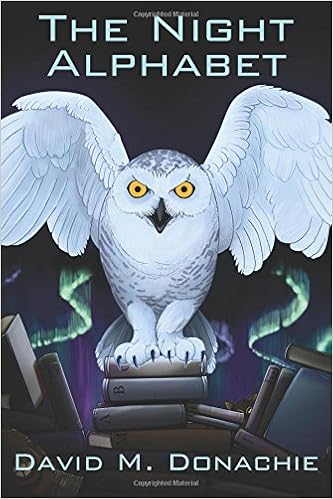
Book Review - The Night Alphabet

By David M. Donachie

Looking for a decent evening’s read? Fancy a quick story without worrying about staying up too late to finish ‘one last page’? Fancy having your mind tweaked by quick, reality-altering stories that require you to get your brain into gear?

David M. Donachie’s ‘The Night Alphabet’ is 26 short stories that range from multi-page stories with startling revelations to simple two-page startlers that grab you by the shoulders, scream in your face and then drop you to wonder what the hell just happened.

Opening with a wonderful, sad tale of refugee angels displaced by a heavenly war, The Night Alphabet starts as it means to go on. In fact, that story, ‘War in Heaven’ is one of my favourites of the book followed by the atmospheric and creepy ‘The Gap’ – I won’t be looking at cracks in the wall the same way again.

But I’m getting ahead of myself. The Night Alphabet, as its title suggests, runs through the 26 letters that refer to the theme of the story. ‘A is for Angels’, ‘B is for Bestiary’ and so on. Each story differs in length, tone and content, from short snappy concepts (‘The Face under my bed’) to darker tales (‘Insomniac’) to comedic, quirky stories (‘Mr Martello and the Cloud Castle’). Each story is well crafted and really captures the mood it is trying to convey, primarily the longer stories as the shorter ones feel like snippets for you to work over in your mind, like sketches before the larger canvas is painted.

The shorter stories did not linger in my mind as much as the longer ones, but they did serve to make me think about where they could have gone, or what the larger world around the tale was like. There was one, ‘The Sandwich Thief’, about an alien, that I would like to have learned more about. The strangeness, the quirkiness of the story – as with most of the stories in the book – was the draw and yes, there were times when I wanted to hear more.

Some of the stories were enjoyable but, as I said before, did not linger in my mind. The incredibly short ones, with perhaps twice as many words as this review, were over in a flash and before I had chance to settle into the tale it was over. They were interesting as they set up a premise and made you think but, without further details or context they slipped to the side to make way for the longer, more enjoyable tales.

But don’t let that put you off; The Night Alphabet is an excellent collection of well-written and enjoyable stories that make sure that you, the reader, engages your imagination. It’s a great bedside table book that you can drift into and out of, and the quirky, otherworldliness of the tales really get the brain working.

Highly recommended.

#AprilTTRPGMaker - all in one go

Throughout April, gamers have been answering daily questions about game design. The idea was introduced by game designer Kira Magrann and has been a huge success.

I can into it a little late, around day 9, so below are all the answers I gave on Twitter.

1 – Who are you? - I’m Jonathan Hicks and I’ve written for the BSFA, a Battlestar Galactica comp game and Fighting Fantasy. I like to design and write TTRPGS of all kinds of genres, and do a bit of illustrating, too.

2 – Where ya at? - I’m in the Northamptonshire area of merry old England. Yes, it is raining as I write this.

3 – How did you start creating ttrpgs? - I used to tinker starting in the 1980s, but I really started when I needed a system for an underwater RPG I had in mind and I felt the D12 wasn’t getting enough love.

4 – Describe your work. – I will design for any genre and the mood of my work tends to shift depending on what I’m writing about, from serious to mystical to casual.

5 – Favourite game you’ve worked on. – Up to yet, Fighting Fantasy ‘Stellar Adventures’ and two adventures I’ve written for the fantasy game, too.

6 – Favourite game mechanic? The original WEG D6 System used in 1st Ed Star Wars: The Roleplaying Game. It was easy, quick and malleable, and I used that rulebook for all kinds of settings.

7 – Your workspace. It used to be really cluttered, but now it’s streamlined with less distractions and with a few inspirational items.


8 – Describe your routine. – I’ll sit down and make sure that there is non-lyric music playing that suits my theme, and then I’ll skim read what I’ve done already and then read through my recent work. Then create, and edit when my brain is emptied.

9 – Describe your process. – I’ll just write whatever is in my head, whether it’s correct or not, so that I get all my ideas down. Once that’s exhausted, I’ll sift through it and give it a basic edit. As long as I can get 2K words done at a time I’m good.

10 – Favourite game to relax with. – To read, that’ll be Warhammer FRP 1st Edition, for sheer flavor. To play, Fighting Fantasy Introductory because it’s so simple, or a gamebook if I have no group.

11 – What’s yer brand? - Farsight Games; it’s nothing official, just something I put my work to when I’m developing new ideas, and for when I release free stuff.

12 – How do you get your work out there? - However I can; social media is huge, of course, and there are Google+ groups that I target along with dedicated forums.

13 – Biggest influences? - Book writing wise, that’ll be Greg Costikyan’s work on the original WEG Star Wars RPG. Designer-wise, that’ll be Robin Law.

14 – What are yer dreams & plans – Just to write and to continue to enjoy it, no matter what the medium be it games, stories, essays or whatever.

15 – Do you design in public or private? – Private at first so that I get a clear idea of what I want with no distraction, but then I’ll send out snippets or first drafts to the public or selected gamers.

16 – Any design partners? – Not right now. I work alone (throws cape across face).

17 – Favourite form of feedback? – Detailed written feedback. I like constructive criticism I can use and ignore ‘LOLZ U SUK’ comments.

18 – Current inspiration? – William Gibson for a D6 setting I’m working on, and the films Alien, Outland and Moon for a new game I’m envisioning.

19 – Game that’s most essential to your design? – I’m not sure I have one, to be honest. If I had to follow a way of doing things I’d model it on the WEG 1st Ed book; the content of that was amazing.

20 – Favourite design tools? – Just a pad and pen for notes and sketches, a full set of dice and my computer.

21 – How many playtests? – As many as it takes for a new game design as that needs to be as good as it can get, but only one or two for adventures, with different groups if possible.

22 – How do you document ideas? – However I can; I have a Dictaphone, a small notepad and my mobile phone just in case something strikes me. I’ve got files full of stuff, in no particular order.

23 – People who’ve helped you? – Everyone I’ve ever gamed with; I’ve seen and experienced so much that it all helps, and there’s a couple of great groups I’ve joined that are really inspirational.

24 – Most notable achievement? – My Fighting Fantasy work. To be able to contribute to the game that got me into the hobby in 1983 as both writer and artist is something magical.

25 – Being a TTRPG designer means… - Spending a lot of time statting TV shows and movies and getting annoyed that you’re missing the show, or wondering how the same shows would work as RPG settings.

26 – Blogs, streams, podcasts? - Just my blog, www.farsightblogger.blogspot.co.uk , which has been going for a few years. I do follow a lot of blogs but not many podcasts unless it’s gameplay about a game I’m interested in.

27 – Feature a TTRPG designer. – Every single one of them; I know it’s a cop-out answer, but the majority of designers old and new have my respect and thanks.

28 – Favourite interview? – I’ve conducted loads, but my favourite will always Gary Gygax on 60 Minutes back in the eighties. The look of incredulity on their faces when confronted always makes me smile.

29 – Your community. – There’s a healthy one, but I’ve not lived here long and I’ve just started a new group with my wife’s co-workers, a mix of new gamers and experienced ones.

30 – Top tips and advice. – Don’t stop... believing.

Sunday, 29 April 2018

RPG Review - Tales from the Loop

by Nils Hintze and Simon Stålenhag

Published by Free League

‘In 1954, the Swedish government ordered the construction of the world’s largest particle accelerator. The facility was complete in 1969, located deep below the pastoral countryside of Mälaröarna. The local population called this marvel of technology The Loop.

Acclaimed scifi artist Simon StÃ¥lenhag’s paintings of Swedish 1980s suburbia, populated by fantastic machines and strange beasts, have spread like wildfire on the Internet. StÃ¥lenhag’s portrayal of a childhood against a backdrop of old Volvo cars and coveralls, combined with strange and mystical machines, creates a unique atmosphere that is both instantly recognizable and utterly alien.

Now, for the first time, you will get the chance to step into the amazing world of the Loop.

In this  game, you play teenagers in the late Eighties, solving Mysteries connected to the Loop. Choose between character Types such as the Bookworm, the Troublemaker, the Popular Kid and the Weirdo. Everyday Life is full of nagging parents, never-ending homework and classmates bullying and being bullied.

The Mysteries let the characters encounter the strange machines and weird creatures that have come to haunt the countryside after the Loop was built. The kids get to escape their everyday problems and be part of something meaningful and magical – but also dangerous.’

This game is about me.

I was born in 1971 so my formative years, the age range and era that this game represents, are perfect. My memories and experiences are the things that this game evokes, and I clearly remember the style, fashion, music and games of the 1980s with nostalgia and extreme fondness.

The 1980s were my teenage years so everything that happened in that decade made a huge impression on me, with tabletop games, the emerging computer game market and the amazing adventure movies the era had to offer. Casting a shadow over all of this was the ongoing Cold War, a conflict that I had been born into and knew little about. However, the ever-present threat of nuclear conflagaration and the ongoing troubles in neighbouring countries were always pushed to the side, out of sight and out of mind. I was a teenager, so I had other, more important things to worry about such as the next school disco, or if I could get to the games shop in the next city to get hold of the newest roleplaying book I needed.

The Loop universe is the game form of artist Simon StÃ¥lenhag’s paintings of surburban Sweden in the 1980s, fantastic images of a normal landscape inhabited by robots, strange towers and peculiar wrecks. The images themselves are an amazing thing, and they not only create the atmosphere they give the visual style that’s prevalent throught the book. The 192 page hardcover has an excellent cover and the layout throughout is crisp, easy on the eye and easy to follow. One thing Free League always does well is presentation, and this book looks great.

The game is set on Mälaröarna, west of Stockholm, and concerns the ‘The Loop’, a particle accelerator created by the government agency Riksenergi. There’s another facility in America at Boulder City in Nevada, but you can create a Loop pretty much anywhere in the world. I’ve already made notes on one in the Peak District in England, hidden under the rolling hills with the towers rising high over Mam Tor. The book gives plenty of scope for your own adventures in your own part of the world, so no matter where you’re from the townyou’ve created, or even your home town, could have a Loop underneath. With robots working in all civilian sectors, magnetrine vessels floating through the air like cargo ships and liners, and strange creatures and incidents popping into existence because of the Loop, there’s plenty going on.


Players take the roles of Kids aged between ten and fifteen. The templates on offer are Bookworm, Computer Geek, Hick, Jock, Popular Kid, Rocker, Troublemaker, and Weirdo, although these are easily adaptable to other types of Kid the player may want to portray. They have normal lives with school and family troubles – elements that the game reflects really well – but they also go on adventures and experience the stranger things the Loop produces. Think 'Stranger Things' meets 'The Goonies' meets 'Super 8' meets 'E.T.' meets 'The Explorers' meets 'Chocky’s Children' meets just about any other child-focused adventure movie or TV show you can think of… kids on hair-raising adventures that grown-ups won’t ever believe, and they can only rely on themselves and each other to get through it.

The game encourages the player to create elements of the character that create something more than just some goofy teenager out of their depth; possible home troubles, their social circle, bullying, teacher trouble, hobbies and their relationships with the other Kids all make for some excellent story elements as well as some amazing roleplaying opportunities.

Players choose a Kid aged between ten and fifteen years, the older they are the more experienced they are but the less luck they have. They divide points between Attributes – Body, Tech, Heart and Mind – and these have relevant Skills. Rolls are dice pools of D6s, adding Attributes and Skills together to create a number of dice, and any that score a six garners a single success. They’re the same mechanics found in Free League’s previous games ‘Coriolis’ and ‘Mutant: Year Zero’ and they work just as well here. Low dice pools can be extremely frustrating with continued failed rolls, but that just makes the single six that sometimes appears all the more exhilirating.

Failing a task can hurt a Kid, but the children will never die. They can be hurt which results in a Condition, which can be emotional as well as a physical injury. To negate these Conditions, a Kid can be helped out by friends but can also turn to a supportive adult – a parent or a teacher or a kind relative – for help. This reduces the Condition and gets the Kid back on track for another adventure.

The Kids themselves get involved in Mysteries that are created by the Loop, Mysteries that the Kids become embroiled in whether it’s their fault or not, adventures that will introduce something that a child would find fantastical and possibly change them forever.


All said, the book is an excellent example of a collaborative storytelling game done right. There’s plenty of scope in here for the GM to create hair-raising adventures and play a traditional RPG where the player’s interact with the story the GM has created, but the game positively pushes for a more group-focused creative approach, where the players have a hand in the setting and the dynamics of the group. The relationships between the Kids and their peers are encouraged to help drive the narative and the roleplaying opportunities, so when the Kids reach their final goal or uncover the mystery the emotional impact is so much more intense.

So, how did we get on with it?

The Loop created under the Peak District is owned by Oxford Age, a government-sponsored firm that has just been privatised. The three towers, as seen on the front cover of the book, dominate the landscape and the small village of Stuttabury (a made up place) sits in their shadow. We created Stuttabury as it was something that we all had in common; we had all spent holidays as Kids in the Peak District or places like it so we knew it well.

One evening during summer holiday, as the Kids are playing in a stream, one of them sees something crawling down the side of the tower. Human-sized but with multiple legs, the shadow creeps down and disappears into the woods. The next day, sheep are found killed but not eaten across several fields…

The mix of Kids gave the game an immediate sense of reality beyond the real-world location we were playing in. A Bookworm, a Computer Geek and a Troublemaker made up the group and to give a sense of a ‘Stranger Things’ mystery (I asked the players to watch at least one of the seasons before we played) I introduced an NPC friend, a Weirdo. Inevitably, this NPC friend who lived on one of the farms that had their sheep killed, the first Kid to see the thing crawl down the tower, goes missing and the Kids, after failing to convince the adults that they saw this thing, have to find him themselves.

Straight away we were not only involved in the game’s plot but we were emotionally connected to it, as well. We had spent an hour creating the characters and deciding their relationships with each other, and we even ran through the last day of school before the holidays, with problems from uninterested teachers, bullies and social awkwardness. It wasn’t played as some kind of ‘this is how I wish I was at school’ angle, but in a more muted, ‘this is why I hated school’ way with no glorification and no ‘defeating the bully to the cheers of classmates’ revenge fantasy. The rules called out for an emotional reflection on not only how the Kid was at school but also gave enough hints to remind you what life, and the world, was like back then. Playing the Kids as normal children just trying to get by was incredibly rewarding and the connection that they had to each other drove the narrative. The players really felt they were involved.

Being a teenager of the 1980s was a huge advantage in the game for sure; the book explains the era but actually living it made it much easier for me as GM to evoke the period. The music, movies, fashion and the gloom of a Britain under Thatcher was easy to recreate, with references to the miner’s strike in the form of radio and television broadcasts, Live Aid, and the Kids getting excited about the new James Bond film ‘A View to a Kill’, which is what they were playing when they saw the thing crawling down the tower. In fact, the missing Kid was playing James Bond, so when they finally faced off with the thing it would not let him go and kept referring to the Kid as ‘my friend Bond’. It added a whole new level of reality to the game and paid off exceptionally well.

In truth, there’s nothing stopping you from setting the game in any other era; with a little tweaking it could be set earlier, or later, in the 1990s or the 2000s. However, the game’s heart is set firmly in the 1980s and the political, cultural and social framework are well represented by the setting. In fact, with the lack of mobile telephones, computers and all the gadgets we rely on these days ot makes for a much more intense world as you can’t rely on a text message or GPS to get you out of the predicament you’re in.

There’s also a cut-off point in the game; when a Kid reaches the age of 16 they retire from the adventuring lark. However, I see no reason why a group couldn’t create older characters and just cap the character creation points at the age of 16, and even go on to create adult characters for more mature stories. After the game we discussed what the Kids would be like all grown up, especially after experiencing the thing on the tower, and what would happen if they found evidence that would prove their stories were true after being disbelieved their whole lives. That’s a great concept, and it’s a story for another time.

But that’s what Tales from the Loop does, it pulls this story out of you. It recreates an age I love and miss dearly, and it takes you back to thinking and acting as a Kid, reckless and ignorant, and it gives you a three dimensional character with heart and drive, which is something that is sometimes sadly lacking in other RPGs.

Tales from the Loop is easily one of the best roleplaying games I’ve come across in many years. It offers a wonderful setting and concept that allows you to be as creative as you please but grounds it in a reality that everyone can identify with, one way or another. The setting of the book is most emotionally resonant with myself, being a child of the 1980s, but it can work as a straight forward adventure game for anyone of any age, and can even be moved to another decade with very few tweaks. I’m already having ideas of a game set in the 1960s.

If you’re looking for a crunchy simulation you’ll not find it here; the rules system is simple and light and focuses more on the story rather than the stats. If, however, you’re looking for a game that is not only rewarding on a storytelling level but an emotional one, too, you can’t go wrong with Tales from the Loop.

Highly recommended.

Saturday, 28 April 2018

Interview - Ken Spencer of Why Not Games

PictureIt was an absolute pleasure to catch up with Ken Spencer of Why Not Games to talk to him about his hobby, his company and the games he produces.

A firm favourite game of mine over the last couple of years has been 'Rocket Age' - my love of the pulp exploits of the Buster Crabbe Flash Gordon and Buck Rogers adventures, as well as 1950s Republic Serials, was my initial draw to the game but I was impressed with the rich, detailed world that Ken had created for his high adventure science fiction game.

Welcome to Farsight Blogger! Please tell us a bit about yourself.

I am Ken Spencer, writer and game designer. I am also the co-owner and creative director at Why Not Games. Before embarking on a writing career I have been an archaeologist, GIS technician, and educator.

What got you into the wonderful world of tabletop gaming?

I was a lonely Navy brat tired of being jumped form posting to posting. I had always been interested in sci-fi and fantasy and my father was an avid board gamer (mostly Avalon Hill). We were living in this wonderfully creepy house in the foothills of the Appalachians. The house was a classic Victorian, creepy basement, attic, old oak tree outside my bedroom window. There was a cemetery between the town and us that added to the overall vibe. I was new to the town and not making friends, so I spent a lot of time reading. I discovered Lovecraft and was introduced to Heinlein and Niven there.

I saw an ad in the back of a Conan the Barbarian comic for this Dungeons and Dragons game. It looked like my father's Avalon Hill games: bookshelf box, colorful cover, dice, and tables. I saved up my allowance and bought it at a Kay-Bee toy store at the mall two towns over. I fell in love that first night playing through the solo adventures in the book and just kept going.

You've got quite a writing history, with work for Cubicle 7 Entertainment, Chaosium, Frog God Games, Alephtar Games and Steve Jackson Games. What kind of work did you do, and how did it feel working for such illustrious publishers?

I have worked on a lot of projects in only nine years, mostly as a freelancer. My first paid writing gig was with Alephtar, I wrote two adventures for Veni, Vidi, Vici, a mini-campaign for BRP Rome. I still do some editing work for them. They are a good outfit that is easy to work with and pays on time. For Steve Jackson Games, I wrote several articles for Pyramid, including my first foray into pulp sci-fi with the Europa Universalis series detailing a GURPS setting where Romans go to Mars and Venus. These articles were a headache to write. The system is complex and unforgiving, but they always paid in full and on time.

My first big project was with Chaosium, a BRP pirate setting that ended up being called Blood Tide. I really pulled all the stops out on this one. I love the BRP system and pirates, and being a Navy brat maritime lore was right up my alley. I threw in all manner of things, an Undying Ponce de Léon ruling a decaying kingdom in Bimini, multiple magic systems including a flexible casting voodoo system inspired in part by Ars Magica, killer mermaids, a blend of Old and New World mythologies, clockwork puritans, you name it. I love writing settings and fiddling with rules systems. At the time Chasoium was in chaos. This was before the new management took over and it took years for Blood Tide to be published. The entire process was frustrating. There were delays, confusions over how many books they wanted, months with no response from the publisher, and all manner of trouble. In the end, the book was published and I was paid, so there is that.

About the same time I was finishing up Blood Tide I started work for Frog God on Northlands Saga. What started as a series of adventures grew into a campaign length adventure path and setting guide. Frog God is easy to work with and pays on time, something that cannot always be said about publishers in this industry. In the end we created Northlands Saga Complete. The kickstarter was successful, and the book that resulted was huge. The Pathfinder edition is over 800 pages long, plus there are a hundred pages or so of fiction and adventures that were part of the kickstarter.

Most of my work has been with Cubicle 7. I created Rocket Age and took the idea to them for publication, and worked on their World War Cthulhu, Lone Wolf, and One Ring lines. While I enjoyed the work on Rocket Age, I had less creative control over the other projects, especially working with One Ring. This is to be expected when working full time for a publisher and especially so with a licensed property.

What made you want to start Why Not Games?

I wanted to write what I wanted to write in the manner I wanted to write it. I also wanted a larger share of the profits from my work.  One day I was having coffee with Sam Parish and complaining about all of this when she interrupted by saying, "Why Not?" That was the moment Why Not Games started, the dream of running my own shop. Not too long after that I bought Rocket Age from Cubicle 7, partly to get control over my own IP and partly because they were planning on ending the product line and there was still a story to tell.

A big part of making this decision was that my wife was on board from the start as co-owner. She brings a lot of business, marketing, and graphic design experience to the company. With her, some friends, and even our son pitching in, well, what's better than launching on a Quixotic quest with your friends and family?

Rocket Age is your primary game (I bought it a couple of years ago and really enjoy it), so what was the attraction to pulp-action art-deco sci-fi adventure?

I am glad you like Rocket Age. I have always been a big fan of sci-fi. I grew up watching Star Wars, Star Trek, Battlestar Galatica and others. The first novel I read that wasn't children's literature was Heinlein's Starship Troopers. Even the fantasy I write tends to be rather sci-fi in approach.

Most of my writing has a very pulpy feel. I like over the top heroics, dastardly villains, and lots of action in my games. The group I have played with the longest pointed out that all the games I run for fun are pulpy. We've done pulp Ancient Rome, pulp fantasy, pulp Noir, pulp Cthulhu, pulp Westerns, and more. I think this style of game builds memories that can last, especially if the players can work in some melodrama. Even Northlands Sage is in part pulp inspired, or at least the sort of theme that 9th Century Scandinavian pulp would take. What is the Saga of the Icelanders or Beowulf if not heroic action and adventure? Aren't the heroes bigger than life and the action epic? Isn't that what most role-playing games are aiming for?

Part of my love for pulp has been a fascination with the world of the 1930s. You have the world at a cusp, the boundary between map and the blank areas is closing just as technology and society are changing. You have huge social upheavals, a restructuring of the economic order, and the looming threat of fascism. Why not add in aliens, rocket ships, and RAY guns? The look and feel of the era, both the gleaming art-deco and the gritty soup kitchens, are easy for the reader to grasp. You have room to tell stories of two-fisted heroes, but also space to talk about the plight of the worker and effects of rampant greed, racism, and sexism. It really is a pivotal and intriguing era in world history.


What else can we expect to see in the future?

More Rocket Age. We just published our first entirely in-house episode, Slaves of the Earthlings that pits our heroes against slavers from Earth who want to kidnap freed Martians and force them back into bondage. The characters must work with an agent of the Tubman Battalion, an arm of the Lincoln Brigade (an Earthling-Martian organization that is seeking to end slavery on Mars and has already sparked one successful slave revolt). Krystal, wife and co-owner, is working on getting all the existing Rocket Age products ready for POD. We started with Heroes of the Solar System since it had been out of print for so long.

Next month we hope to release our first Rocket Age fiction anthology with stories by Ed Greenwood, Andy Peregrine, James Spencer and me. Depending on how well received the first anthology is there will be more, and possibly even a novel or two. A major part of growing out IP is to branch outside of tabletop games. We want everyone to enjoy Rocket Age, tabletop gamer or otherwise.

Currently there are two other Rocket Age products in the works. Imperial Jupiter, the long awaited sourcebook on Jupiter and its moons is finished and waiting for art to be completed. There have been some delays, but we are back on track (and looking for artists by the way).

I am nearly finished writing the adaptation of Rocket Age to the 5e system. This has been eating up most of my time the past few months with writing, editing, and playtesting. We hope to have the first book, Player's Guide to the Rocket Age ready for outside playtesting in a few weeks (contact Ken at ken@whynotgames.com to join the playtest). Tour of the Solar System, a setting and GM's guide, will be done shortly afterwards. You can follow our journey on rpg.net in the Rockets Away! column starting in May. Both will be previewed at GenCon this year with several events and we hope to launch a kickstarter in the fall.

After that, even more Rocket Age. The sourcebook for the outer planets, Edge of the Solar System is being worked on; it is too early to even hint at a release date. We have four more episodes ready when the schedule opens up. There are also going to be adaptations of all the current books and episodes to 5e. Speaking of the episodes, we are looking at getting those into larger print distribution, possibly as a complication. From this fall going forward all Rocket Age products will be published in two versions, one for the Vortex system and one for 5e.

After that, we have some vague plans but nothing more than a few outlines and a stack of butter themed post-it notes (thanks Brian). I would like to do a technology book that gives more Ancient Martian artifacts, rocket ship design rules, and other goodies. There are notes for a book of alien beasts and other foes. I have a little more than an outline for Canal Era, a new core book for Rocket Age that is set on Mars thousands of years ago at the height of the Canal Era. It has a very post-apocalyptic science-fantasy feel to it.

Your other games include 5e compatible supplements…

Right from the start we wanted to do some 5e compatible products. We saw a need for races beyond the usual elf, dwarf, human, and so forth. Weird Races (5e) is an attempt to not just add more race options, but to look at races in an entirely different way. While we have the stat blocks, feats, spells, and other play material you need, we also take a more anthropological perspective. What do they eat? How do they marry? What are their philosophical and religious views? When you begin with these as the questions you develop something more than a set of numbers on a character sheet.

We started with anthropomorphic animals since they give an easy hook for people to imagine. We all know what a cat is, and the Caturday are very cat-like, just as the Surial are based on bears. Going forward, we plan to branch out into some utterly weird territory. Next up is Little Grey Aliens, which takes the grays of popular folklore and turns them into a playable race. This book focuses more on their technology and how to use them in your campaign, which we hope is a fish out of water. Imagine a member of a Grey survey team who wandered off and missed the ship back home. Now, lost on some strange world, they have to find a way to survive with nothing but their wits and a proton blaster.

There are around a dozen weird races in the playtest stack and as we work through them we will polish up and expand the bare bones outline and stats into a full book. Rocket Age is our primary product line, but we plan to put out at least four weird races a year. Just a hint of what we have going on, there are two reptile based races, a set of races inspired by Atlantis, Lemuria, and Mu, as well as a set inspired by classic horror monsters.

Tell us more about Weird Planets.

Weird Planets is our planned Starfinder compatible product line. They will be small books, around 25-30 pages, each detailing a solar system, the planets there, and the native intelligent species. A lot of Weird Planets comes out of our experience with Weird Races, particularly how to make a short title of utility to both players and GMs. Each Weird Planet title will feature adventure hooks, new gear, new monsters, one or more new playable species, and other goodies we can fit in.

The first Weird Planet is Catopia Prime and details the KÃ¥tze System, its planets, and the native Caturday. Yes, we are going for cats in space with this one, though not all of the Weird Planets will be Weird Races in space. The Caturday are explorers, traders, and pirates with technology on par with other species in Starfinder. Their home world and the rest of the system provide a fine place to stop over as well as sources of adventure. We detail every planet, from the smallest dwarf planet rock to the biggest gas giant. We are nearly done with the art on this one and are looking at a release early this summer.

What does the future hold for Why Not Games? More RPGs, or perhaps some branching out into other tabletop games?

We want to take Rocket Age to the very heights of geekdom. There are not any solid plans as yet, but we would like to do other types of tabletop games using Rocket Age. I have some notes and a mock up card game I have been working on, and there are notes for a board game but nothing definite. Although they are nothing we are equipped to do in-house, we are open to other media for Rocket Age, such as comic books or miniatures. We just aren't there yet. Keep in mind that my education and work experience is as an archaeologist, I tend to think in rather long time frames. In short, Why Not Games and Rocket Age are not going away, just going up, and who knows what we will find out there among the stars?

With Slaves of the Earthlings we feel we have started to hit our stride, keeping in mind Why Not Games is not even a year old. We have had some success with Caturday (5e) and Surial (5e) and got some of the kinks out of our process. There will be more of these small products, more weird races and some weird planets for Starfinder (I am looking at the art for Catopia Prime and it is going to be a gorgeous book of cats in space) plus some small 5e books. I have to take a break every now and then from Rocket Age to clear the palate. Check our website at www.whynotgames.com for the latest updates.

Friday, 27 April 2018

Wargame Review - Burrows & Badgers: A Skirmish Game of Anthropomorphic Animals

Burrows & BadgersBy Michael Lovejoy

Published by Osprey Games

‘The Kingdom of Northymbra is a land in turmoil. King Redwulf is missing, and his son rules as regent in his stead, facing threats from within and without: growing dissention among the knights and nobles of the realm, whispers of revolution from the Freebeasts, Wildbeasts encroaching on the borders, and bandits of all stripes making the most of the chaos.

Burrows & Badgers is a tabletop skirmish game set in the ancient realm of Northymbra, a kingdom where mice, badgers, toads and other animals wear armour, wield swords, and cast magic spells.

Your tabletop becomes part of the Kingdom of Northymbra, whose ruined villages, haunted forests, and misty marshes play host to brutal ambushes and desperate skirmishes. Lead your warband from battle to battle, and uphold the name of your faction, whether you stand with Reinert's Royalists, the Freebeasts of the Fox Families, or simply for your own glory or survival.’

I’m not sure that I’ve ever considered running a game of anthropomorphic animals, where woodland creatures walk, talk and dress as humans and their species determines their personality or capability. In fact, the closest I ever got to talking creatures is Watership Down, so my only frame of reference is a book about talking rabbits. It’s not a great leap to imagine them in armour and swinging swords, so here goes.

The hardback 144-page book is well presented, with black and white illustrations and full colour model photographs. Something that Osprey Games does really well is presentation, and this book is no exception.

The location is excellent too – the ‘animalised’ (is that even a word?) version of England, with borders, history and troubles, is a great setting for the game. It concerns a missing King, terrible weather (well, it is England) and enemy raids, so there’s plenty going on for your warband to get their teeth stuck into and gives plenty of scope for stories and plots to unfold in a possible metagame.

Players will create a warband with various allegiances. These warbands – Royalists, Rogues, Freebeasts and Wildbeasts – are each unique in their own right and have special rules that best represent them. For example, the Royalists will have access to specialist training that makes them much more effective in combat. Your chosen warband is given a Den that acts as a central base which gives certain bonuses and aid between battles, depending on where you decide to set up home. Then you can arm and armour your troops.

These warbands will consist of different creatures great and small; Small Beasts are mice and small birds, Medium Beasts are your cats, rabbits, adders and lizards, Large Beasts are foxes, rats and otters and Massive Beasts are badgers and dogs. In all, there are 39 species to choose from, all have a point cost to decide what you can and can’t have in your group. Each character is represented by statistics; Movement, Strike, Block, Ranged, Nimbleness, Concealment, Awareness, Fortitude and Presence. There’s a selection of dice to use from d4 to d12 – the higher the die the better - and when you fight you roll off between the two skills and the highest number wins.

There are modifiers to help, and damage is determined by the difference between the scores. So, in combat you’ll use your Strike value against your opponent’s Block. If you were shooting you’d use your Ranged value against your opponent’s Nimbleness to make a hit. It’s very simple, quick and a lot of fun.

There’s magic, too, and your magic users can cast spells from different schools; Natural Magic, Light Magic, Dark Magic, Wild Magic, Unbound Magic and Noble Magic. Each school has six spells so there’s plenty of choice between damage, buffs and healing.

The large number of choices gives plenty of scope for players to create pretty much any kind of warband they like, capable of all sorts of things both physically and magically. The choices are very good and a lot of time will be spent deciding exactly what kind of warband you want to go with.

Then there’s a selection of eight scenarios to play through, from simple one-on-one combats to more story driven co-op conflicts, and these are good fun and give you an insight into how to set up your own fights.

Image from the rulebook
All in all, it’s a decent system with a great background. So, how did we get in with it?

First of all, it’s worth noting that I didn’t feel there was anything about the system that truly got me excited. It played well, that’s for sure, and it was quite simple and easy to use. I like the fact that it made me think about how my warband should be constructed based not only on the point cost but also on the abilities of the creatures I was choosing. The game does an excellent job of reflecting the setting and your animal choices do make a difference, but the game system itself didn’t really do anything for me. It works well and we had a good time with it, so the fact that it’s functional and represents the idea of warring anthropomorphic animals well is a huge bonus.

However, it was the setting that I enjoyed the most, and the fact that this translated into the gameplay was what I found satisfying. If you do love talking badgers and foxes with swords – if you’re a fan of Disney’s ‘Robin Hood’ and Brian Jacques’ ‘Redwall’ novels – then you’ll get a lot of mileage out of this. The background gives some excellent scope and I could imagine these creatures running around a fantasy 16th century England having battles and adventures.

As a tabletop roleplayer I could see plenty of potential in this as an RPG; the setting needs fleshing out and the history needs expanding, but when started naming the members of my warband then I knew that the game had succeeded in pulling me in. Booris the Badger Knight is my favourite, and we’ll never forget Takout the Otter, may he rest in peace.

One thing I have to say is that this game will look great with dedicated miniatures, such as the ones supplied by Oathsworn Miniatures. Sadly, we had to use card counters with crude drawings on them to represent our playing pieces and I do feel that we would have gotten so much more out of the game had we used personalized painted figures.

So, all in all? I really enjoyed it. If you’re looking for a straight forward skirmish game with some decent mechanics it’s worth a look but I’m not sure seasoned wargamers will find anything new here, but if your heart is in the wild world of armed talking rabbits then this is most definitely worth the purchase, and you’ll be crying havoc and letting slip the dogs of war on a regular basis.

Recommended.

Image result for Burrows & Badgers interior images
Image from rulebook

Thursday, 26 April 2018

Taking in-game conflict personally

Fine Crosshairs by GDJPlayers shouldn’t take in-character events so personally. I think, however, that this can’t be avoided, especially when it’s player-versus-player. If a random GM NPC gets the better of a player character then the player generally accepts that as failure against an element of the game (unless of course, the GM is playing a Mary/Gary Sue GMPC, but that’s a different matter entirely). But if another player gets the better of them then things can get pretty colourful.

I was running a Star Wars game many moons ago in which a player created a character working against the other players, an Imperial spy feeding information back to his superiors. He had to make rolls to make sure he sent this information out without being discovered but I did not tell him if he failed or not. In fact, I was rolling secretly for the other players and once they beat his roll I let them know, secretly, what he was up to. It was up to them to decide whether to confront him or feed him false information. In short order they set him up, confronted him and then, after a failed escape attempt on his part, they dealt with him. One dead traitor PC and two very satisfied PCs.

The player in question wasn’t happy about being found out and killed so quickly – even though it was him that wanted to create a PC to work against the players and make himself an enemy – and it made it even worse in the fact that he had been found out and stopped not by an NPC but the other players. He quickly created a new character. In the very next game, the first chance he got, he dropped the other players into trouble and tried to kill them. For no reason. At all. There was nothing about the character that would justify such an action, and he put all his dice into combat skills to make him incredibly tough to beat. He simply created a combat-heavy PC so that he could kill the other PCs for stopping his previous character from doing his nefarious deeds.

I can understand players being upset with other players if they obstruct, kill, loot and otherwise annoy their PC simply to be annoying. God knows I’ve seen enough of that at the gaming table. But some people take it too far, take it very personally even if the events and actions in the game are justified based on decisions and actions, and they let it colour their perception of the game for a long time. In fact, the games with this player broke down very quickly after his assassination attempt because no matter what characters they played or what game they played in they simply couldn’t trust him not to make an attempt on their lives at some point. Their in-game decisions weren’t based on the characters they were playing but on what kind of mood this particular player was in. That’s not a game, that’s a joke.

Keeping the feelings of the player separate from the player character is a definite in my book. You can get emotionally involved with the PC, that’s for sure, but when the game is over then the game is over, and harbouring resentment against other players isn’t the way to go. If the player is being a total dick and is simply out to get you then that’s a justified complaint but it should still be dealt with outside the game. ‘Hey, mate, I’m not really enjoying that and it’s kind of ruining the game for me. Can you not?’ It’s as simple as that. But getting revenge for some imagined slight by plotting and scheming and trying to kill a PC that another player may have spent months investing their time in, and in turn derailing the game to pursue personal vendettas – that’s not great.

Just remember, in the absence of any evidence to the contrary it’s not personal, it’s roleplaying. And if you set yourself up as the bad guy, working against the rest of the group, don’t be surprised if they stick a targeting signal transmitter in your backpack and then bomb you from orbit.

Wednesday, 25 April 2018

Interview - Scott Wainwright and the Brutality Skirmish Wargame

Image may contain: text

Say hello to Scott Wainwright, the creator of the popular skirmish wargame 'Brutality, an excellent tabletop skirmish game and, better yet, it's completely free!

'So What Is Brutality?

- Use any scale models from any game
- Create your own stats
- Play with points, or not!
- Alternating activation
- Skirmish Wargame with RPG-lite aspects
- Campaign System
- A setting that allows you to bring your favorite characters together
- A model’s facing matters and different assault tactics get different bonuses!
- Free rules and no models to buy! What could be easier?'

I caught up with Scott and asked him a few questions about the game and the history behind it.

Welcome to Farsight Blogger! Tell us a bit about yourself and how you got into the tabletop hobby.

Hi Jon! I am a weekly 40k author over at BoLS who goes by the name Pimpcron. I was looking to find a new hobby about ten years ago and stumbled across the 5th edition Warhammer 40,000 starter and it caught my eye. I got talking to the store owner and learned that they had a weekly group that met and I ended up joining that. My first army was purple and gold Necrons, which my friends called "The Pimpcrons" which I  adopted as a pen name.

'Brutality' is a great free wargame as it enables players to bring their own miniatures to the table, no matter the scale or genre. What was the genesis of this idea?

Kickstarter. Haha. Over the years, my friends and I had Kickstarted so many miniature wargames and never played them much. I had boxes of unused minis in my closet, and felt really bad about not being able to use them. Given that I have been making board games, card games, and RPGs my entire life, I decided to make a game that would plausibly allow me to bring any characters from any universe I wish. I have made dozens of warbands and some of them are from my childhood such as Star Trek, Thundercats, Ninja Turtles, etc. I made this game for my own use with no intention of releasing it to the public because I am an avid solo gamer. But after having several friends help play test it, they all said that I should release it so that other people could play it as well. And so, two years of play testing and revisions later, we officially released the rule set in the Fall of 2017.

It was 'two years in the making' before release; what was your design process? How did you mold the final product?

At the start, I listed the elements that were most important to me in a game.

The choice to make it a skirmish game was two fold: As much as I like mass-battle games such as Warhammer or Kings of War, I wanted to be able to make an army without painting hundreds of models. Brutality usually uses 5-10 models per side. The other reason was that I have a love for tactics and strategy. I have always felt like skirmish games make every action count more due to the small number of components. If you lose a soldier in a mass-battle game, it's no big deal. But if he makes up 20% of your army, that is a big impact.

I also wanted to add RPG-lite elements to it in order give it another layer of customization and a narrative feel. Campaign games are where this game really shines because your characters slowly lose their mind as they die time and time again and it can lead to some really heart breaking moments. My very favorite character recently went crazy and wandered off in our store campaign. He will be coming back as a wandering monster in the future, confused and angry. Other players have a Knight who have became a pacifist due to PTSD, or a Sniper who has become dead inside and unable to pray at altars anymore. These models aren't useless, but you have to work around their mental issues.

All of our missions are designed around narrative encounters that warbands would stumble into while exploring the Ether Realm. So it makes perfect sense that any two warbands might have to set aside their differences in order to stop a rampaging behemoth. Or in order to gain Ishtar's favor, one warband decides to go on a killing spree in a populated area while the other side wants to stop them.

Another important part for me was adding as much depth to the rules and options as possible, while making the options balanced and generic enough that it could fit any genre. Two players could potentially create identical Support characters, give them the same perks, and the exact same Powers. One is a technomage that harnesses nano-tech to produce barriers of nanites to create cover, while the other is a Woodland Elf who forces the ground to jut up in front of him to stop oncoming fire. But of course with several hundred combinations of character creation, you would have to purposefully try to create two identical characters.

Game design has always been a passion of mine, so creating the initial game rules took only a couple months. The rest of that two years was play testing, play testing, play testing. Balance is paramount to me in a game and countless tweaks and changes have been made over time to make sure both players have an equal chance of claiming victory. I wanted choices (and a bit of luck) to determine winners.

What do you feel makes this game unique from other wargames?

For starters, everything is free. Free rules, free supplements, and you use your own models. I'm not selling anything, I just want people to enjoy the game.

The custom character creation is a big difference from the norm. It is more than just equipment or weapons; you can cross genres and franchises. You aren't narrowed to a certain couple factions, your imagination can go wild. After playing a "big name" game like Warhammer for so long, I have found immense joy in finding all manner of 3rd party miniature sites to make warbands with. I feel like you can really own your army versus being told what they are like. But like everything in Brutality Skirmish Wargame, if choosing an already established faction is your thing, we have over a dozen major factions in the fluff to choose from; each with their own motivations and alliances.

My favorite part of tabletop gaming is when the dice tell a story, which is why I added the Wound Charts. You don't just lose Health when you are injured, there are other effects depending on where you were hit. A Head Injury involves your Willpower being deduced, causing the use of Powers to be more difficult and upping your chances of being Confused. Just got yourself a Leg Wound? Enjoy your diminished movement and running distances until you can get that healed up.

The setting is really interesting. How did that come about, and what came first, the setting or the rules?

The idea of an ancient belief-fueled God hatching a secret plan to regain power has been an idea I have toyed with for years. I have always enjoyed reading about mythical characters and enjoyed in how brutal they were. People back then didn't mess around apparently.

Another aspect to this was the idea that I never liked about nearly all other games: Your hero dies, but is somehow back next week to fight again. Well did he die or didn't he? I liked the idea of every in-game death being real and having lasting effects on your character's psyche. Nobody can kill or be murdered over and over again without mental problems. Once I established that I wanted death to be a temporary but horrifying element of this setting, the rest kind of wrote itself. If you witnessed brutal violence, bloody treachery, and a your own murder countless times, what kind of mess would you be psychologically? This is a very fun game but the setting is quite dark.

After figuring this out, I set about making the rules with traumatic stress being a key element.

There is a supplement out for it, 'Lands of the Ether Realm Book 1'. What can players expect in this, and is this the first of many?

I created a huge, intricate map to go along with this game, and I wanted to flesh out the people, animals, plants and factions that live in these different areas. Lands of the Ether Realm Book 1 covers just one region in the Land of Ishtar called The Wastes which is home to four large and distinct biomes. Here you will find backstory to each area, along with campaign events and items you can find by exploring them. On the last page is a special mission that pertains to a particular bloody pastime in a settlement called Redcamp which is a fun diversion from senseless killing.

I have mapped out roughly a dozen different zones that will be made into Realm Books like this one. This supplement is the first of many, and absolutely free.

What other kinds of support will Brutality receive in the future?

I have tons of secret plans for this game! I can't disclose them all, but I would love to have authors make an anthology of short stories outlining the horror of living in the Ether Realm. The supplement Realm Book 2 is almost finished. Eventually we will be having a hardback rulebook printed (but the rules will remain free online). A token and template set is also on the horizon (but not required to play). So, I truly love this game and our community is growing by the day. I have a lot planned for this, and hope people enjoy it.

The rules, supplements, videos, photos, and our community can be found on Facebook or people who don't Facebook can reach me at brutalityskirmishwargame (at) gmail.com for get the rules.

This has been fun Jon, thanks for your time!