Saturday, 11 November 2017

Some tips on describing combat in a roleplaying game

man fighting death by AJGame mechanics and rules are all well and good – after all, they decide what you can and can’t do and if you do or don’t succeed. Most role-playing games don’t work without them. Asking for the players to make dice rolls is a regular occurrence, especially when the players get involved in combat of one form or another. In fact, in a lot of games, any conflict is most likely where the most amounts of dice rolling is going to take place. You’re probably going to be rolling dice to decide on hits, parries, dodges, damage and any other number of eventualities that happen during combat. In high adventure games this is a certainty.

But with all this combat comes a slight problem, and that problem is this – when fighting the battles, the game sometimes changes from a detailed narrative to simple number crunching and bookkeeping. The combat becomes the game; i.e. the rules mechanics are continually the forefront of the chatter as the conflict is decided.

So, after a long time detailing the game world with eloquent narrative, detailed descriptions and interesting NPC/PC conversation, the game suddenly shifts into numbers and tables, dice rolls and results. ‘Rules-speak’ replaces ‘Game-speak’ – this can stall the otherworldly atmosphere you’ve created.

How to avoid this?

Rely on the game

Many games already have their own detailed combat tables but these tables describe the effects of combat and not the actual event itself. Certain games, such as Rolemaster or Warhammer Fantasy Role-play, have random descriptions that describe small slices up to amputations, head ringing blows up to concussions, even beheadings if the roll is high enough. At first this sounds great – finding out what kind of damage you have done can be exciting as the fight progresses, but once the characters are of a certain skill then only a few of the higher-end critical descriptions apply. There are only so many times you can read out the same entry for every foe slain.

To counter this, change the description slightly. Some descriptions are simple, at any rate such as ‘Cut deeply into arm, +5 hits’ or ‘Shot to head, +10 hits, stunned 2 rounds’, so they’ll be easy to build upon. If the description calls for a beheading, just tone it down to a throat-cut. If an arm is lost, then make it a hand, or lop it off at the elbow, or at the bicep. As long as the effect of the wound is the same as it is written on the table, the details of how it happened do not need to be repeated.

For example, taking the entries above, lets say a PC hits a foe in the arm and rolls the ‘Cut deeply into arm, +5 hits’ description. As well as explaining the effects (if it is in your house rules to detail the condition of enemies in combat) you could say, ‘your sword cuts into his upper arm and he howls in pain – fresh blood splashes down your blade and stains the carpet scarlet’. A little bit of narrative helps visualise the combat and also helps to prevent the encounter from turning into a dice-fest.

Now, lets take the second entry ‘Shot to head, +10 hits, stunned 2 rounds’, and let’s say it is the PC that has been hit. As well as detailing the effects of the critical, you could add ‘the bullet slams into your left temple and for a moment there is bright light and pain, the blood pounds in your ears and the room spins out of focus’. At this point, the player has no control over what happens to his character so you have free licence to describe the incident as you wish.

Remember - don’t go overboard with your descriptions. Combat, depending on the situation, can be fast and furious. Simple one- or two-line descriptions as in the examples above are all you’ll need. Long-winded details such as ‘your sword swings with a flash of steel like lightning, cutting through the armour of your foe and then into the flesh, followed by a scream as the wound bites deep, the enemy staggering backwards from the pain and the shock, the blood splashing…’ and so on will slow the game down. Also, in a long combat, you won’t be able to keep the narrative going before you start to repeat yourself and then the effect will be lost.

Of course, you can’t always rely on the game to supply the details of the combat.

Gamesmaster’s control

Combat is ultimately under the direct control of the GM. The players, for their part, can describe the tactical moves the PC’s are making but the results of their decisions, the description of the fight and the movement of the NPC’s is controlled by the GM. Each player makes their dice rolls to determine their success – it’s up to the GM to describe the results of these rolls.

a) Initial Confrontation

When the PC’s and the intended threat first face off, the GM must describe the environment and the reaction of the NPC’s. A lot of encounters might begin with numbers, weapons, who looks like they’re in charge etc, and then the battle commences with surgical precision. ‘They look like a threat, lets fight them’ kind of thing. By adding a little description to the encounter, such as what is in the immediate vicinity of the characters and the appearance and the emotional reaction of the NPC’s, the GM can already begin to add detail to the encounter.

For example, let’s say three PC’s have wandered into an Orc camp. There are two ways the GM can describe the initial encounter:

The straight report – ‘You find yourselves walking into a small clearing where five roughly-dressed Orcs are camped. There’s a fire in the middle, and the Orcs see you, gather their weapons and attack.’ This is a straightforward way of beginning the fight. It gives details of the vicinity and the rough appearance of the Orcs, and the fact that the PC’s should get ready to defend themselves.

The detailed report – ‘You crash through the thick vegetation to find yourselves in a small clearing. A blazing fire burns in the centre and silhouettes five figures standing casually by it – Orcs. They are dressed in a variety of rusted breastplates and broken chain mail, dirty and unkempt, and as you appear they turn to face you. There’s a moment of shock as they stare at you, evidently not expecting company, and as the shock fades they draw their rusted swords and run forward, faces contorted with rage’. As the combat is not yet joined then you can afford the long description. What this longer detail tells the PC’s is that the clearing was well hidden, the Orcs are not expecting trouble (an advantage they could capitalise on) and that they aren’t very well prepared for trouble, what with their mess of armour and old weapons. Although some of this detail will not aid the PC’s in the fight, it gives the encounter a sense of identity and helps imprint the visualisation of the scene in the player’s mind.

b) Conflict

When battle is joined the GM has to think fast. Not only are they responsible for the actual mechanics of the fight, they must also quickly insert little snippets of detail to bring the combat to life. There’s no need to detail every tiny moment of the fight, but small sentences during combat, with larger descriptions inserted to heighten the more important parts of the fight.

For example, PC #1 hits Orc #1 with his sword. The rolls dictate that the PC hit the Orc, that the Orc tried to parry but failed, and the blade hit the Orc in the chest, robbing him of three quarters of his hit points. The GM could, to speed things up, simply describe the results of the rolls. Preferably, they will go into more detail determined by the drama of the moment.

So, if the PC hits an Orc foot soldier as part of the ongoing fight, the GM could say ‘you swing your sword (perhaps even miming the move) and cut down at the Orc, who lifts his blade to intercept but fails, and you slice him across his chest, sending him staggering and howling’. This is enough. You could go into detail regarding the arc of the sword, the flash of steel, the ripping of armour, the spray of blood, the face of the enemy… this is all very good, but you must remember that combat, in most cases, is fast and bloody. Describe the action but don’t dwell on it unless the player is impressed with what they have done.

On the other side of the coin, lets say the PC has hit the Orc Chief, or is cutting down the last Orc of the fight. Then the GM can add a bit more detail as this is obviously an important part of the conflict. It is here that you can wave you arms about, contort your face, howl as the enemy does – ‘You swing your sword overhead, hacking down at the Orc Chief (mime the action here) who, already wounded, tries to lift his sword to intercept but he reacts weakly (mime here). Your sword slashes him down the chest, slicing armour, cloth and flesh (indicate the body area where he has been struck on you r own body), and he staggers back, his faced shocked and pained (contort your face) and he crashes onto his back and lays still’. As this moment is a dramatic moment, either the defeat of an important NPC or the end of the battle, then the GM can go into a bit more detail to represent the turning point or the winding down of the conflict. Physical representation by miming the moves or expressing the features of the NPC’s add an extra dimension and helps the PC’s visualise the fight.

c) Resolution

The fight is over – for better or worse. Now it’s time to wind things down, let the PC’s catch their breath. If your descriptions have been enough to help visualise the fight and the combat has been fast enough then the players will be emotionally tired. It’s time to gather your wits and review the situation. Who’s injured? Who’s dead? What has been broken, or lost? Describe the blood, splattered ground, the pain of wounds, the sweat, the tears, the deep breaths of exertion. Don’t just run the fight – you’ve described the initial encounter and detailed the fight but your job is not over yet.

For example, let’s say the PC’s are victorious but one of their number is seriously wounded. Describe the scene after the fight, with Orc corpses littering the clearing. Maybe one has fallen dead on the fire and is cooking with an acrid stench. Their blood will stain the ground, the weapons and the PC’s. Any wounds suffered will slowly be realised as the adrenalin wears off – cuts and grazes and slices and gashes will bleed and ache, limbs will ache with exertion, heads will hurt with the shock of it all. The badly wounded PC might be crying out in pain, clutching a badly mangled limb, crying for help. This will be up to the players to act out, but the GM should make them aware of their injuries and their state.

On the other hand, the GM might be of the ‘high adventure’ ilk. Perhaps the game is played with an abandon, so that when the enemy is defeated the PC’s all walk from the fight with puffed-out chests and a knee-slapping bravado. Still – that’s a group preference and not considered in this article.

Player control

a) Initial Confrontation

Using the examples under the Gamesmaster’s control heading, the players can have a hand in the description of the fight by actually narrating their actions instead of the GM. This solves two things – 1, the GM has some of the work taken off them as the players shoulder some of the action and 2, it gives the players more sense of control over their PC’s.

So for example, let’s say the three PC’s have just burst through the foliage to see the five Orcs. Instead of the player simply saying ‘I draw my sword and attack’, he could add a bit of detail, such as ‘I stop and stare, shocked (mimes a surprised look), and grab hold of my sword’. This is a small detail but every little bit can help to the final image of the encounter. Remember, the player will be reacting to the GM’s description. Be careful, mind – don’t interrupt the GM as he sets up the scene with premature descriptions. This can disrupt the flow of the narrative. Wait until the GM pauses for input or asks you your response before deciding on a course of action

b) Conflict

The GM might be of the ilk that describes the combat and the players roll the dice – although this takes the pressure off the player, it’s always best to add your own little bit of narrative. Instead of saying ‘I hit the Orc with my sword’, embellish it a little. Say ‘I swing my sword overhead (mime the action if necessary) and cut down at it’. If you parry a blow, mime the action and say ‘I’ll knock his sword away with a clang!’ or something. Try not to simply roll the dice and say ‘I got him’. Roll the dice and say ‘I slash at him (mime the action) with a roar – argh! – and throw my weight behind it’.

Again, be careful not to go overboard with your descriptions. Detailed narrative of the intricacies of holding a sword, the rippling of muscles and a slow motion slash might be entertaining to you, but there are other players and a GM to consider and bullet-time miming might slow things down a bit. Also, don’t go over the top with the physical manoeuvres your PC might attempt. Back flipping over the enemy, landing square behind him and pirouetting into a slice might sound great but when you barely scratch him with your attack, or the GM adds all kinds of modifiers to the dice roll for the action, you’ll soon realise to keep it simple. Unless the action has a tactical advantage or it is part of the PC’s fighting skills then leave it out and concentrate on what you can do.

c) Resolution

So, the fight is over. The enemy lie dead, but what wounds have you suffered? How do you feel? How long did the fight last? It’s all well and god looking at your character sheet and noting that you’ve taken several hits, but how do those hits physically manifest themselves? Act the part of a wounded person – that slice across the arm might count for five hit points, but it’s still a slice across the arm. You’re in pain. You’re hurt. Five Orcs just tried to slice you up – you’ll be trembling from the encounter, and as the adrenalin wears off you might get the shakes or cold flushes, depending on the demeanour of your character. You might be the stoic type, bind your wounds with a grimace and do your best to appear defiant. You might collapse under the strain and want to be left alone for a while. If you’re badly injured, you might need help, writhing in agony. The point is, act out the aftermath, role-play the condition of your character. That loss of hit points means something, the stats of your character mean something, the attitude of your character means something and it can all be used to describe how your character acts after a major fight. It adds a dimension of reality to the whole proceedings and can be very rewarding.

Different kinds of combat

Below are several short ideas of descriptive things to remember when running certain types of combat.

Fist and kicks
The slap of flesh, the shock of impacts, the thump of fists, the grunts of pain, the bruising, cuts and scrapes, the dizzying blows, the winding punches, the staggering falls, the crash of furniture, the cracking of bones.

Hand weapons
The clash/ring/flash/gong/rattle of steel, the swoosh of swinging weapons, the cries of pain, the fear of expression, the splash of blood, the stench of offal, the slipperiness of the ground, the ache of bones, the slicing of flesh, the cutting of limbs, the white light of stuns, the roar of anguish and defiance.

Missile weapons
The crack/bang/explosion of weapons, the swoosh of arrows, the shock of impact, the surprise of being hit, the penetration of missiles, spraying of blood, the sharp pains, the splinter of bones, the screams of agony, the tenseness of aiming, the clouds of dust of near hits, the whistle of bullets and shells.

Energy weapons
The flash of light, the screech of energy, the heat of near hits, the melting of flesh/bone/metal, the cries of pain, the crash of explosions, the smell of burning, the haze of smoke, blinding bright light, the hiss of decompression, the shouts of conflict.

Vehicle combat
The screeching of tyres, the roar of engines, the thump of impacts, the crash of metal, the speed of aircraft, the spiralling of star fields, the brightness of explosions, the thump of concussion, the shaking of vehicles, the cries of shock/anguish/surprise, the blare of horns, the wailing of sirens.

Thursday, 9 November 2017

A Frostgrave Scenario - The Well of Liars

Photo courtesy of & (c)
The Lunar Games Society
Although I’ve created this for Frostgrave it can be used as an encounter for most roleplaying games, especially if you enjoy using miniatures. If you’d like to see more of these one-shot encounters just let me know.

This is my first go at creating a proper Frostgrave scenario. The games I have been involved in have been the published ones with a few custom maps created on the fly. I’ve watched some huge battles take place with four players at my local gaming club, so if you do have more than two players up for this then just increase the table size.

The Well of Liars is a deep hole in the ground where, if the carvings on the walls are to be believed, liars and cheats were tossed in and kept alive by powerful magic. Now the magic has faded and the dead are climbing from the well…

SET UP

This can be played on a 3 by 3 table. It is mostly barren with a 2-inch circular well in the very centre. Each corner and half-way point between each corner of the table needs to be numbered in order, so there should be eight in total. You can place small amounts of scenery, such as fallen columns or boulders, but there needs to be a clear line of sight from the well to the number on the edge of the board.

Four treasure tokens should be placed randomly within 3 inches of the well.

SPECIAL RULES

Every round, during the Creature Phase, a skeleton will emerge from the well and run at full speed in a random direction. Roll 1D20 and halve the result, rounding up.  The number rolled is the number at the edge of the board the skeleton will run towards. If a 9 or 10 is rolled, the skeleton remains at the well and the D20 is rolled during the Creature Phase in the next round. Another skeleton will emerge if there is one still at the well or not, and will need to be rolled for independently.

The skeletons will ignore the player’s warbands in an attempt to escape the horrors of the well; however, if they come within 2 inches of any player’s model they will attack. If the player breaks combat the skeleton will not pursue and continue on their flight to the edge of the board.

With players trying to get to the treasure and fend off the skeletons, it should make for an interesting game!

TREASURE AND EXPERIENCE

Treasure and experience is as standard Frostgrave rules.

Disclaimer: This is a fan-created scenario designed for fun. It is in no way endorsed or supported by Osprey Publishing. Frostgrave is copyrighted by the relevant owners and no infringement is intended.

Wednesday, 8 November 2017

In Memory of Burgen Beerswiller, Basic D&D Dwarf Level 2

A part of me died, once, on Thursday 21st February, 2013. This highlighted my frustration regarding one of the drawbacks of low-level character investment.

Burgen Beerswiller, a Basic D&D dwarf created on the 27th September 2012, fell under the sword of a particularly nasty hobgoblin whilst trying to clear out a subterranean temple. After 28 kills, attaining level 2 and winning the favour of the locals and the Lord of the region, donating his gold to the local church to fund the rebuilding of a church to St Cuthbert to help bring a failing market town back to prominence and fighting a pitched battle to save a small village, he bought the farm during a random nondescript encounter in a corridor.

I was pissed off with it at the time. Obviously I took a chance with him in what was obviously a dangerous dungeon and threw myself into combat - as I always did - and he fell to three consecutive bad die rolls and a very lucky critical roll so I'm fine with that part of the game as that's the nature of it. Sometimes luck simply isn't on your side.

On the other hand, I'd invested quite a lot into this character. He was gruff but polite, he was gracious to the unfortunate and quite understanding (for a dwarf) and he had a great story arc on the go, so to play him for five months only to have him die an ignoble death with no resolution to the few plots he had become involved in, and even helped to create, leaves me with a huge sense of frustration and playing any other character to continue his quests won't bring me the same sense of satisfaction I would have enjoyed had I completed them with Burgen, the character I created with the intention of experiencing these adventures.

This is one of the drawbacks of this kind of Basic D&D game, in any game where death is a couple of dodgy die rolls away. While I enjoy playing in high-adventure heroic campaigns, where death is dodgeable and major wounds are a minor distraction, it can be a little underwhelming as the danger and sense of risk isn't there. Yes, it's fun defeating the evil overlord in an amazing way but without that sense of death looming over you it can sometimes feel hollow, turning the game into just a shared storytelling experience that might not suit all the gamers at the table. On the other hand, with these high adventure games you can invest time and effort into the character and really develop them, enhancing the roleplaying experience and really watching an epic saga unfold.

The mortality rate of high-risk games such as Basic D&D pretty much scuppers this kind of gaming, and even if you've played a PC for several months there's always the risk of a horrible random death, as is what happened with Burgen. In some ways I got overconfident with him as he'd rolled high for both of his two levels of hit points and I was quite capable of taking a couple of serious hits, and I was used to high-adventure games where the heroes would get stuck in, so it was inevitable that he'd meet a fate such as this. I think what upsets me the most about the death of Burgen is the fact that I had invested so much into him, and the overconfidence meant that I was quite happy to create a history and personality for him as well as make plans for his future in the game. Now all that work and all those ideas feel like a waste of time.

The ongoing problem with this, of course, is that I created a new level one cleric, and straight away I'd given him a past, a personality and a modus operandi... straight away I've invested creativity in a character that might die in his first encounter, but that's the way I game and I can't help myself, and besides - it's called a roleplaying game for a reason. My playing piece is called a character, after all, and if I regarded it as anything else then I might as well be using the boot out of Monopoly.

Not only that, but there may have come a time when my new character, Brother Sagart of the Church of St Cuthbert, would no doubt have continued where Burgen left off so that the DM could continue his adventure, but the downside of this is that it will always feel like Burgen's adventure and this character is just filling in. I won't have the same level of emotional involvement in the game as at the back of my mind I'll be thinking 'this is what Burgen should have been doing - you know, that dead dwarf you played for five months'.

I love the sense of risk, danger and adventure in Basic D&D. It's what gives it it's edge and it's sense of excitement. On the flipside, I'm wary about investing too much time in a PC for fear of wasting my time, which does make the characters simple playing pieces, rolling off the PC production line to give me a chance to roll some dice with my friends.

Originally posted February 2013

Tuesday, 7 November 2017

Frostgrave: Ghost Archipelago

Frostgrave: Ghost ArchipelagoIt's available, and it looks fantastic.

I've yet to get my hands on a copy of this - I devoured Frostgrave when it first came out and got hold of all the print books, as well as interview author Joseph McCullough - and I love the setting and the rules system. I had gotten back in to tabletop wargaming with Mantic's Kings of War (1st Edition) years ago, and as much as I enjoyed that I was looking for something a little more focused, with fewer models; I'm not that into models, and as much as I like them I never had the painting skill - or patience - to be any good. In fact, I'd just dip my already assembled figures in red paint and say 'They're mine'. I used to play Blood Angels a lot.

It's a stand-alone game in the same world as Frostgrave - an excellent setting with a vague background. I did try to push Joseph for more details at this year's UK Games Expo but he's keeping it tight to his chest, and quite right too. The mysterious background of Frostgrave is what gives it it's power, and the small details that come out make it quite compelling.

I also wanted to see if I could use the rules for a roleplaying game set in the world and have players roleplay out certain encounters, using the rules for the general combat. It was still a skirmish game at heart, but I added a few skills and social mechanics to flesh it out. It was fun - it certainly wasn't perfect - but first and foremost this is a wargame and at that it excels.

The setting is great for some really melodramatic roleplaying, especially if the players are wizards; why do they feel the need to enter this dangerous city? What drove them there, what are they looking for, what are they trying to prove? What do they hope to do with whatever they discover outside the city?

And if they play a warband member, that opens up all kinds of new possibilities. Why risk themselves for the ego of a wizard? Are they going into the city for any other reasons, personal reasons? How bad was life for them away from the city that they felt the need to face almost certain death?

It'd make for some great gaming sessions, especially if each of the players have their own secrets that may sometimes clash with the goals of other players...

Anyway, I'm looking forward to Ghost Archipelago. With another swathe of excellent art by Dmitry and Kate Burmak, this looks to be another winner.

'The Ghost Archipelago has returned. A vast island chain, covered in the ruins of ancient civilizations, the Archipelago appears every few centuries, far out in the southern ocean. At such times, pirates, adventurers, wizards, and legendary heroes all descend upon the islands in the hopes of finding lost treasures and powerful artefacts. A few, drawn by the blood of their ancestors, search for the fabled Crystal Pool, whose waters grant abilities far beyond those of normal men. It is only the bravest, however, who venture into the islands, for they are filled with numerous deadly threats. Cannibal tribes, sorcerous snake-men, and poisonous water-beasts all inhabit the island ruins, guarding their treasure hordes and setting traps for the unwary.

In this new wargame, set in the world of Frostgrave, players take on the role of Heritors, mighty warriors whose ancestors drank from the Crystal Pool. These Heritors lead their small, handpicked teams of spellcasters, rogues, and treasure hunters into the ever-shifting labyrinth of the Ghost Archipelago. Using the same rules system as Frostgrave, this standalone wargame focuses on heroes who draw on the power in their blood to perform nigh-impossible feats of strength and agility. This game also includes 30 spells drawn from five schools of magic, a host of soldier types, challenging scenarios, treasure tables, and a full bestiary of the most common creatures that inhabit the Lost Isles.'

Monday, 6 November 2017

Could you get a long RPG campaign from Introductory Fighting Fantasy?

Advanced Fighting Fantasy 2nd Edition is designed for long-term campaigning, that much is sure. The rules are designed to allow growth and improvement to a player's hero, and that's great.

But could the basic version of the game, Fighting Fantasy: the Introductory Roleplaying game also get this treatment? The characters are only really good for short-term and not really designed for long-term games spread out over weeks and months. You could do that, with no discernable improvement to the characters, but it'd have to be a compelling story, and one of the things a lot of players like is growth for their character that's not only reflected in the story they tell but also in the stats on the sheet improving.

I've had a little success with this in my basic Fighting Fantasy games - I was going to use the acronym 'BFF games', but that has all kinds of other meanings.

I made a few really rough notes - I'm not even sure that most of the changes work that well - and I'm sharing them below. None of this is official, of course, and Advanced Fighting Fantasy is your best call for campaigning in Titan.

CHARACTER CREATION:

All PCs start with SKILL 6, STAMINA 24 and LUCK 6. These are the standard skill levels of all untrained heroes.

Of course, you’ll want to be able to change those abilities to make sure that your PC is different from the rest, to make the hero unique so that you are playng a character that you feel comfortable playing.

To increase SKILL or LUCK by 1 point, the player must reduce STAMINA by 3 points.

If they want to be able to use MAGIC, they add the MAGIC SKILL at 6, and points are spent the same way. Then use the MAGIC rules in The Riddling Reaver.

EXAMPLES: SKILL 9, STAMINA 9, LUCK 8 - SKILL 7, STAMINA 9, LUCK 8, MAGIC SKILL 8

When making SKILL or LUCK rolls, instead of the roll-under mechanic set a target number of 15 and this is what they need to roll on 2D6 plus their score, plus any SPECIAL SKILL scores. Lower the target number for easier situations, say down to 10, raise it for more difficult situations, say 20. Double 1s are always a failure, and double 6s are always a success.

SPECIAL SKILLS:

Each player is given 3 points to spend on SPECIAL SKILLS.

When making a roll where the SPECIAL SKILL can be used, also add this score to the SKILL score.

They can choose to spend these points in any of the following skills – no more than 2 points in a single skill. Whatever SPECIAL SKILLS the player wants they can choose.

For a bit of fun, and for those who like to live on the edge, you can roll a random SPECIAL SKILL -  roll 3D6, results are cumulative.

3 - 1-handed weapon
4 - 2-handed weapon
5 - Bow
6 - Crossbow
7 - Polarm
8 - Thrown
9 - Ride
10 - Swim
11 - Climb
12 - Bargain
13 - Command
14 - Sneak
15 - Artisan
16 - Sleight of Hand
17 - Lore
18 - Hand-to-Hand

DAMAGE:

Damage - for a hit, roll 1D3 for hand to hand, add 1 for single handed weapons and normal bows, and add 2 for double handed weapons and bigger bows. They also get a +1 to damage for every 10 points they have in STAMINA.

ARMOUR:

Armour was a number that reduced damage by that score, but any round-winning rolls of Double 6 were a critical and negated all armour.

When hit, roll a D6, and roll equal to or less than the Armour Score to succeed. A shield can be used with any armour and the score is added to the armour score, but two-handed weapons can't be used. If the roll is successful, the damage is reduced by the Armour Score.

Shield: 1
Leather: 1
Chain: 2
Scale: 3
Plate: 4

ADVANCEMENT:

After every session players get a single Experience Point, with an extra one for good roleplaying or defeating the bad guy, and they can spend these on Special Skills. They have to earn enough points to match the total number that Special Skill is on - including the SKILL score - and then they can increase it by 1 point. So, if you have SKILL 8 and a Special Skill of Bows at 1, then that means you have to spend 9 Experience points to get Bows up to 2.

Sunday, 5 November 2017

I had problems with AD&D 2nd Edition

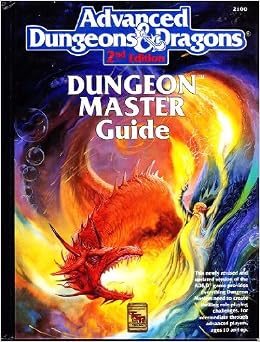
Image result for AD&D 2nd editionI played a lot of Basic D&D in the 1980s and then went on to AD&D 2nd Edition. I enjoyed Basic D&D but I could never fully get my head around AD&D. My first opinion of it was that it was too complicated but that was to be expected, coming from Basic D&D as I did. I played it for about a year and during that time I slowly changed from simply disliking it to outright hating it. It just didn't work for me.

That obviously stayed with me for a long, long time, and I was kind of stuck in that unjustifiably negative viewpoint no matter how much I wanted to play the game; I was getting excited about settings such as Birthright and Spelljammer, but then refusing to follow up on those feelings because it was AD&D 2nd Edition, and AD&D 2nd Edition sucked. Honestly, what an idiot.

I found this letter I wrote and posted to DRAGON magazine way back in the late 1990s, before 3rd Edition was announced. Even back then I still had a bee in my bonnet about AD&D 2nd Edition after a whole decade. I had obviously given up on the game late 1980s after playing in a particularly bad campaign, which no doubt unjustly soured my view of AD&D 2nd Edition, but I obviously couldn't get past my myopic 'this game is bad!' viewpoint.

I'm going to assume the letter was never published - I stopped reading DRAGON magazine around the same time I wrote the letter.

My only conclusions about this letter is that firstly I obviously knew naff all about WotC's take over of TSR, and secondly I was an opinionated little git with a massive corn cob up my butt about nothing.


JONATHAN HICKS

(My address)

ENGLAND

Dear Dragon,

I have noticed a trend recently for players to continually discuss the necessities of certain rules and rule applications during a game. From what I can tell from the sort of enquiries you get in your regular SAGE ADVICE feature, there are a lot of players and referees who need clarification on how certain aspects of the rules system works. I am sure that this goes for other games, and not just the AD&D genre.

This worries me. I get the impression that more people are worried about the adjudication and interpretation of the system instead of the actual game itself. This leads me to conclude that there are many gamers out there who haven’t bought their games to role-play, but to take part in an elaborate wargame.

I think this stems from the old days of dungeon-bashing, when a wicked referee would design a cruel dungeon to pit his friends against, and not care about how the players would react in a role-play situation. I would like to think that the game has come a long way since then, but it appears not. Although I understand that many new gamers will treat the game in such a way, and this column helps them along the road to becoming a better role-player, it does not encourage any of the players to optionalise or find a way around the ruling to make everyone happy. I get the impression that the whole game is on ‘hold’ whilst the enquirer waits for an answer to the question.

In fact, the whole of DRAGON magazine is fundamentally the same. It appears to be a monthly book of charts and tables to add on to an already overbearing and outdated role-playing game. There are new characters and creatures, but they lack depth and just appear to be another monster with a long list of statistics and abilities. They have histories, sure, but these are just to make them appear more of an individual than the last monster or character.

You have to remember that yours is probably the only major international magazine on the shelves, with every other magazine either folding after several months or not even getting the kind of exposure you do. Personally, I think it’s time for you to change. I know that a lot of your readers will stand and cry ‘there is no need to change! Everything’s fine, and the magazine is just right for us! We will keep it that way!’ Remember, TSR are not their own company anymore now that WotC have taken them over, which, considering that TSR were supposed to be the biggest role-playing company around, does not bode well for the gaming industry as a whole. Now that other big companies have gone (such as Games Designers Workshop and West End Games), I think that Dragon magazine should reconsider it’s duty as ‘The World’s Most Popular Role-Playing Magazine’ and start to include other games for it’s major articles, and not just the AD&D game, which may be the original role-playing game but is now also the most stagnant.

AD&D was an inspirational game but now it’s time for a change. Keep the Statistics, such as Strength and Charisma, but lose the saving throws, which seem very contrived, and introduce a better skill system, maybe something based around the skill check roll or the percentile skill roll. This will broaden the abilities and scope of the game and make it a hell of a lot easier to understand. I don’t actually play the AD&D game anymore, I haven’t played it since the second edition came out, but I have continued to buy Dragon because I still like the nostalgic feeling I get when I read it. Now I am very disillusioned with the magazine, because all it does now is repeat itself.

I understand that this letter will probably not get printed; after all, it is not exactly a letter of praise, but my intention is not to offend or be unsupportive of your future. It is to make the readers think a little more about role-playing as a whole, and not just the AD&D game, and if they support the entire hobby as they support TSR, then the role-playing world will get the boost it needs to grow once more.

My final message is this - it’s time for a change, Dragon. Maybe you should shed your scales and start again.

Thanks for your time,

JONATHAN HICKS


This post originally published Sept 2011

Saturday, 4 November 2017

My Original Star Wars RPG designs from 1987/1988

30 years. Wow.

So, for your viewing pleasure, here are some of my first ever game designs for West End Games Star Wars: the Roleplaying Game, from way back in 1987/1988.


This one is very first map I drew in 1987, the day after I bought my copy of Star Wars: The Roleplaying Game. I wanted my own Rebel base, and I created a small one on an idyllic world of boating ponds and woodland walks. It was designed as a retreat, a place where player characters could go to rest and recuperate, pick up missions and generally hang out.


These two were created in 1988, and the image on the left is a downed starship being used as an outpost. At first it was controlled by smugglers, but after being outed the Rebels used it as a small strike base deep in the Mid-rim territories. I remember liking to idea of it but don't remember getting much use out of it.

The crash site on the right is a downed Star Destroyer, the impact of the mighty starship hitting the ground devastated the land for miles around, but the crash also bought trade and industry as the locals used it as place of interest and melted parts of the destroyer down to use - they were a pre-industrial race and they needed the metals for their own wars. By this time, the Empire and other scavengers had already taken what they could and left the rest to rot.


Finally, another Rebel base on the left and a space station on the right. The base was a complicated warren of abandoned tunnels and caves in what was one of many single towers of land on an otherwise ocean world, and as the world had no natural resources of note it was ignored by the Empire. What the Rebels didn't know is that the original inhabitants of the world were returning, and they wanted their homes back...

The research station was created for a standard 'trapped on a station with killer aliens' game. You know... Aliens. It is much larger than you can see in the picture, but the game was pretty derivative and didn't really go anywhere. I always liked the design, though.

You know, I might use all of these again. The 1980s were a great time to be a tabletop roleplayer.

This post originally published 17-12-2015

Friday, 3 November 2017

NEVERLAND - Here Be Monsters!

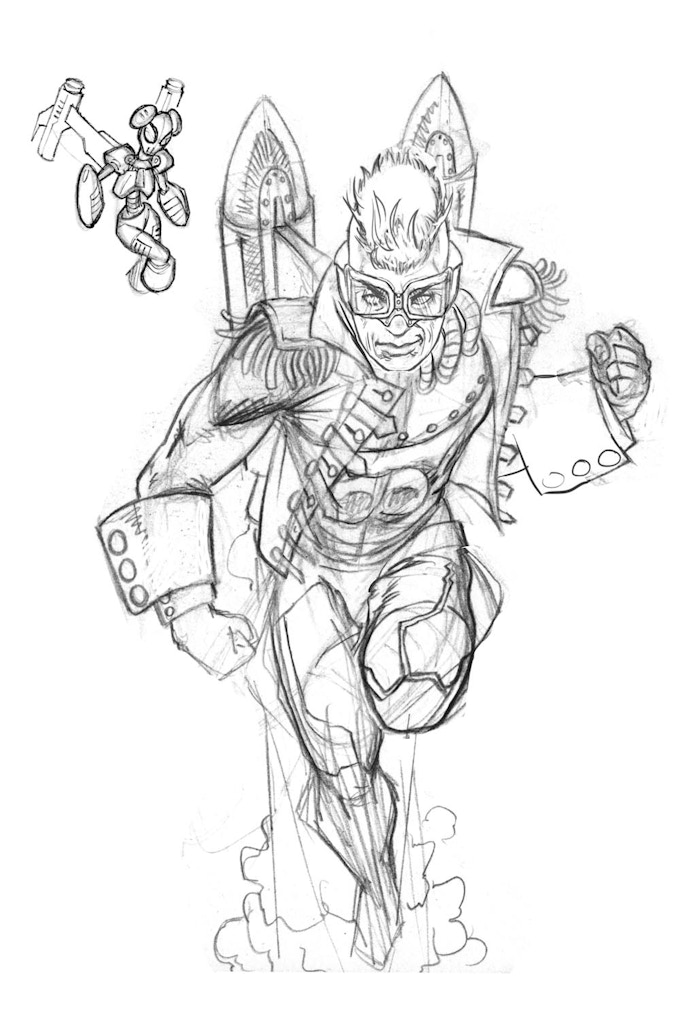
Peter Pan and Tinkerbell reimagined by Kev Crossley
Peter Pan & Tinkerbell
concept by Kev Crossley
Here's something that looks like a lot of fun...

Imagine that Wendy from the Peter Pan stories was on the Titanic, got separated from the other survivors and washed up on a mysterious island where Peter Pan wears a jetpack and Tinkerbell is a tiny robot. Oh, and there's dinosaurs.

Sounds weird? Damn straight it does. That's why it's cool.

Gamebook author Jonathan Green - who I interviewed a few years ago and was a thoroughly all-round downright decent chap - is hoping to bring us this insane story as a gamebook with full rules for interacting with the denizens of Neverland.

The Kickstarter is running now as of this post.

From the website:

"NEVERLAND is a brand new adventure gamebook - a multi-path book, very much in the style of Choose Your Own Adventure or Fighting Fantasy Gamebooks, in which you choose the course of the story - inspired by both Peter Pan and Wendy, by J. M. Barrie, and The Lost World, by Sir Arthur Conan Doyle.

It's Treasure Island meets Jurassic Park! It's Cutthroat Island meets King Kong! It's Pirates of the Caribbean meets The Land That Time Forgot! It's Pirates versus Dinosaurs! And you can play as either shipwreck survivor Wendy Darling or automaton avenger Peter Pan. Anybody who has read and played The Wicked Wizard of Oz or Alice's Nightmare in Wonderland will have a very clear idea of what to expect!

At 11:40pm on the 14th April, 1912, during her maiden voyage, en route to New York City, the RMS Titanic struck an iceberg and in the early hours of 15th April the passenger liner sank. 1,503 people died, including passengers and crew, but 706 people survived, among them Wendy Darling and her dog Nana...

Separated from the rest of her family, Wendy's lifeboat drifts for days until it washes up on the shores of a mysterious island - a place lost in time, home to creatures long thought extinct, a forgotten tribe, and a boy who can never grow up.

But the notorious pirate Captain James Hook and his crew have also found their way to Neverland, and the island is angry..."

Jonathan Green is an author, editor and games designer, best known for his Fighting Fantasy adventure gamebooks, as well as YOU ARE THE HERO - A History of Fighting Fantasy Gamebooks, and the Pax Britannia steampunk novels.

He's got some serious pedigree in this area, so this is a project well worth getting involved in.

The handmade, leather-bound journal, the traditionally sewn Jolly Roger pirate flag, the dice and dice bag, and the pirate's treasure chest - just some of the rewards on offer with the NEVERLAND Kickstarter.

Thursday, 2 November 2017

My first ever Basic D&D game design

This is the very first page of my very first Basic D&D adventure I wrote 33 years ago, when I got into D&D and the RPG hobby became one of my favourite things.

I created my own campaign world and the idea was that as the players explored they opened up new areas of the setting. Sadly, it wouldn't get used for another five years in a short-lived campaign I can barely remember.


I do remember a fight in a keep on an island just off the coast, and an attempt to slip a knife to a PC so that he could cut a man free who was about to be executed. The adventure was incredibly railroaded, if I remember, as I had the main story perfectly laid out and the players were, for the most part, along for the ride.

There was also a cave with the skeleton of a dragon inside, and a small used campfire within it's rib cage. It was really important for some reason. I think the dragon used to guard the hidden entrance to a massive dungeon, but I don't know if I'm remembering that correctly. Why you'd hide an entrance and then attract attention to it by putting a dragon there to guard it I have no idea. Teenage logic.

The rest of the document is quite detailed, with every location mapped and every point of interest in that location described and statted. I liked to think that I was ready with a foe or an encounter no matter where the players decided to go and so I'd design accordingly. I was a first-time DM then, and I'd try to plan for every eventuality. I also had this 'me-against-them' view of the game as I was new to the hobby and still had the boardgame mentality, as if I was challenging the players to defeat my adventure. I still have that in me in some ways, but now I'm less interested in them beating my scenarios, and more interested in seeing how the players react to them.

This post originally published 20-07-2014

Wednesday, 1 November 2017

I've discovered a new D6 System game - Exilium

Gorgeous cover, too
This looks really interesting - Exilium from Fire Ruby Designs, a science fiction roleplaying game using Open D6.

The D6 system is one of my all-time favourite systems, my personal preference being the simple WEG Star Wars D6 First Edition rules. It was fast, intuitive and you could really modify it as you saw fit. In fact, by just using the WEG Star Wars D6 First Edition rulebook I was able to create games in most genres. It's excellent.

Now I've come across Exilium, a sci-fi game with quite the setting (which I've copied further down). I've downloaded the Player's Introduction and had a read, and although it doesn't go into any proper rules detail so I can't comment on how the D6 System has been utilised, I can see on the free character sheet that the stats are Might, Wit, Agility and Charm, with just a very few skills in use. It seems that the system is simple with very little additions.

It does give some background on the setting itself, as well as some player pointers. If these are the opening chapters of the main book then it's clear, well laid out and has some excellent artwork. The setting sounds incredibly intriguing and, while I always prefer open character design and don't always like being told what I'll be playing and why, there seems to be plenty of scope here.

There also seems to be some support for the game on the store page, too, at really cheap prices. I think I'll add this to my ever growing list of games to get hold of.

The game blurb is below:

Something has awoken.

What you know...

Increasingly you feel you are not in your own body. Dreams have come that shake your belief in yourself. Your sleeping mind is full of incredible hints at higher realities, snatches of a heavenly existence, and the pain of a terrible fall from grace. Now this place where you live no longer feels like home. And the Dreams are getting stronger, and stranger…

What you have been told...

The thing that calls itself the Envoy has told you that something has awakened inside of you. And with that awakening comes a realisation that you were once something more than human; you were a god, a post-human, one of the Numina.

Your world was called Elysium – a paradise beyond this reality. Separated from the material realm, your kind found delight in watching and manipulating the lesser beings trapped in a material existence on the Flame Worlds, playthings created for your pleasure. You called it Dreaming, an endless source of entertainment and intrigue.

But times change. You committed a crime.

And for that you were thrown out, ejected, named an Exile. Now even in your awakened state Elysium seems little more than a vague memory.

Now that this truth has been revealed to you, it seems an obvious thing.

But there is hope. The Envoy offers a way to resolve the guilt of your crime. Increasingly you see that this is the only way you can return to Elysium. Under the Envoy’s guidance you invoke your one-time comrades, the Numina, and through them reveal more of your home and your past. Doing so risks psychosis, but the Envoy gives you the black pills to help with that.

This is where you are – the Flame Worlds, a place of death and intrigue, among billions of souls trapped in this mundane existence. You and your fellow Exiles must accept the Envoy’s offer, and meet others of your kind to do his bidding. What will you discover among the Flame Worlds? Who knows, but if it ends your exile, it is worth it.